Projects › DTMF-Based Home Automation
ProjectDesign of a DTMF-Based Home Automation System
Project Team
Overview
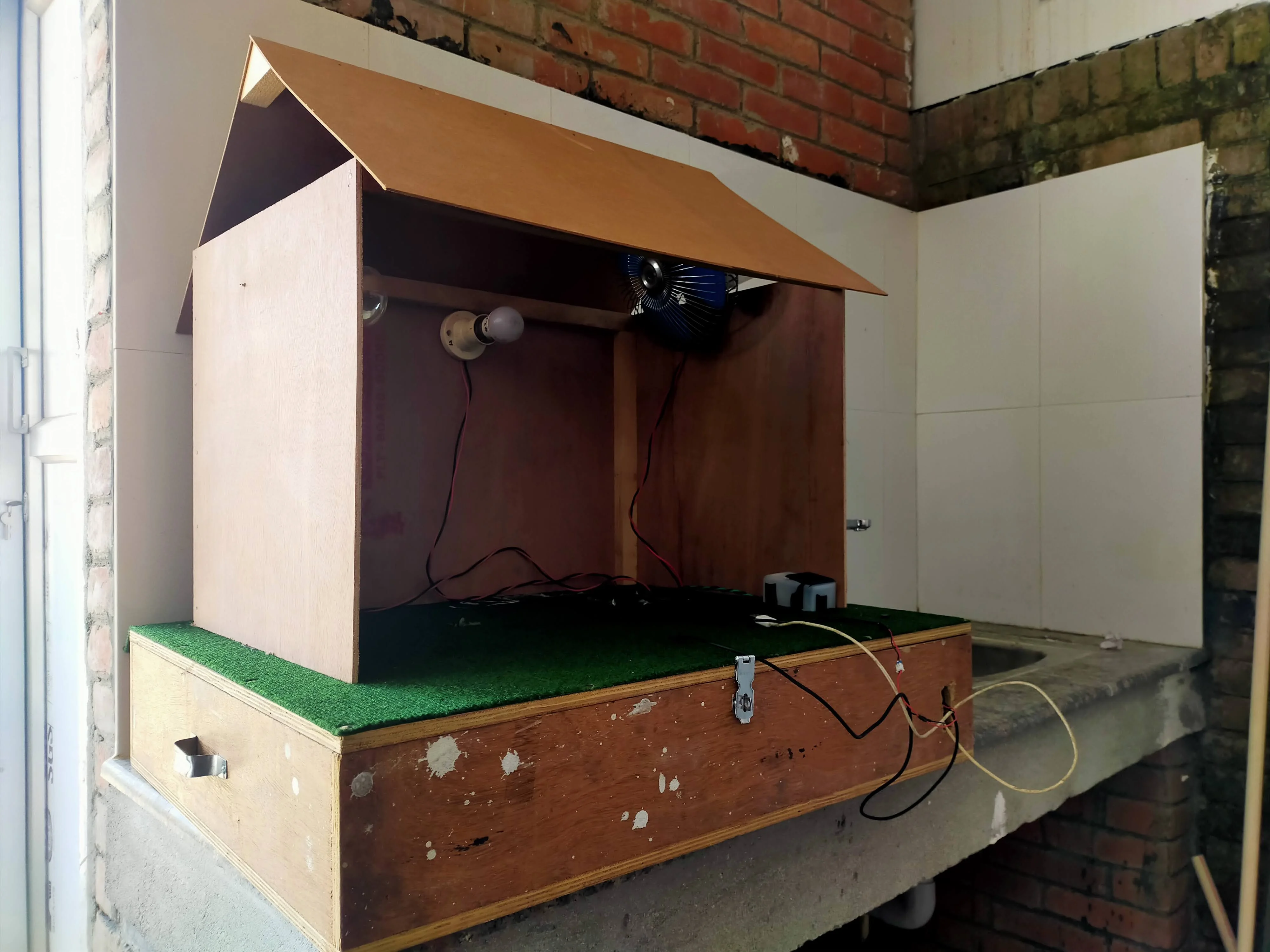
This project addresses a practical need in low-connectivity environments: reliable remote control of household appliances without dependence on internet infrastructure. The system leverages dual-tone multi-frequency (DTMF) signaling — the same tone-pair encoding used by the public switched telephone network — to transmit control commands over any standard telephone line. Pressing a key on a telephone keypad generates a pair of audio-frequency tones whose combination uniquely identifies that key, and the receiving circuit decodes this pair to activate a specific appliance channel.
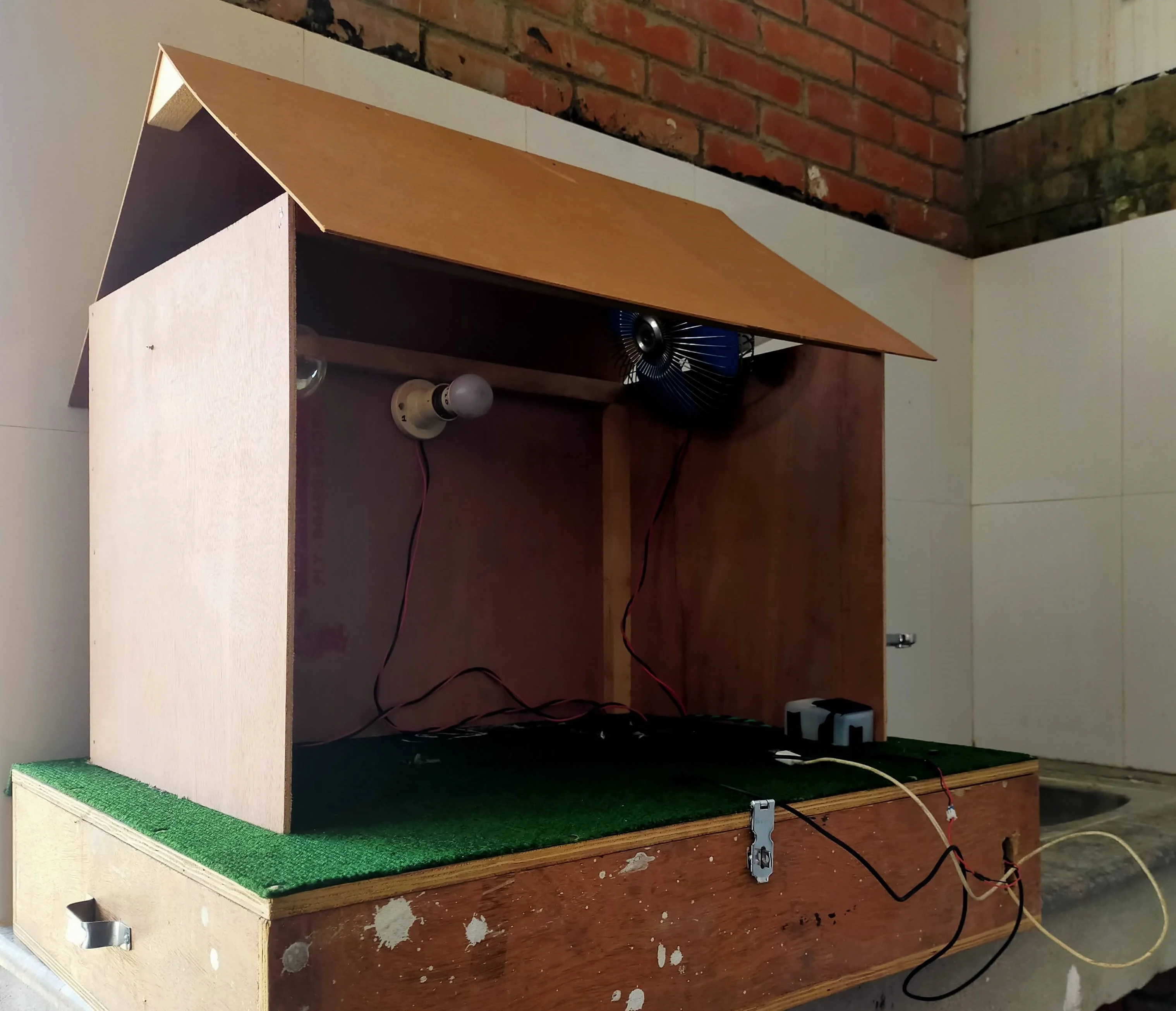
Four load channels — lights, fans, and outlet circuits — are independently switchable, and the system responds to all 12 standard DTMF tones (digits 0–9 plus * and #). A related journal paper documenting the design and experimental validation was published in the Himalayan Journal of Applied Science and Engineering, vol. 2, no. 2, pp. 46–53, November 2021, establishing the work as a peer-reviewed contribution rather than a student exercise only.
Technical Approach
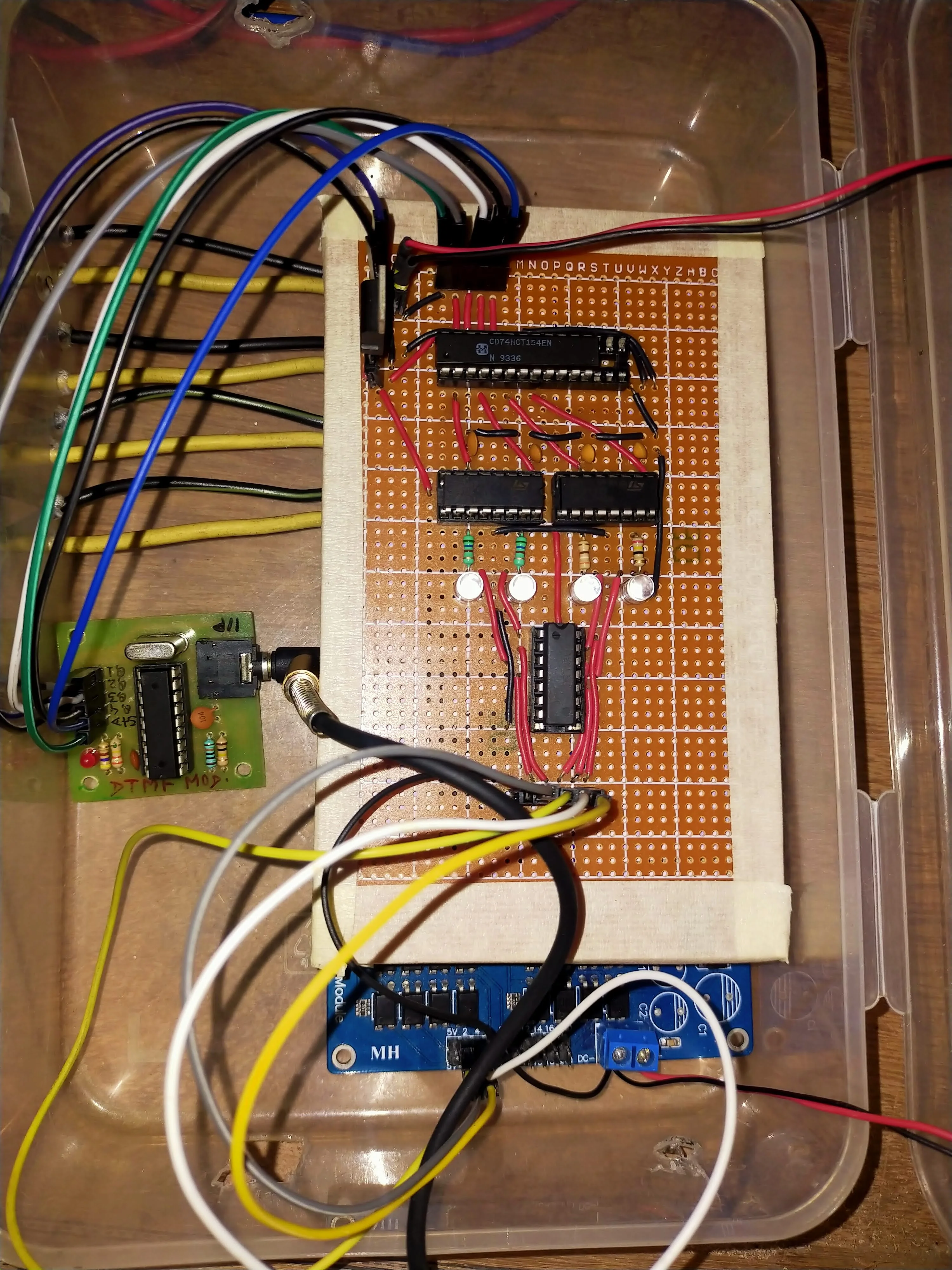
The central decoding element is the MT8870 DTMF decoder IC, which implements a digital counting algorithm over a band-split filter bank to resolve the row-frequency and column-frequency components of each tone pair, outputting a 4-bit binary code that identifies the pressed key. This binary output drives a ULN2003A Darlington transistor array, which provides sufficient sink current to energize four reed relay coils without stressing the decoder outputs. Each relay switches a 230 V AC load on its normally-open contact, with optical isolation at the relay-driver boundary to protect low-voltage logic from mains transients.
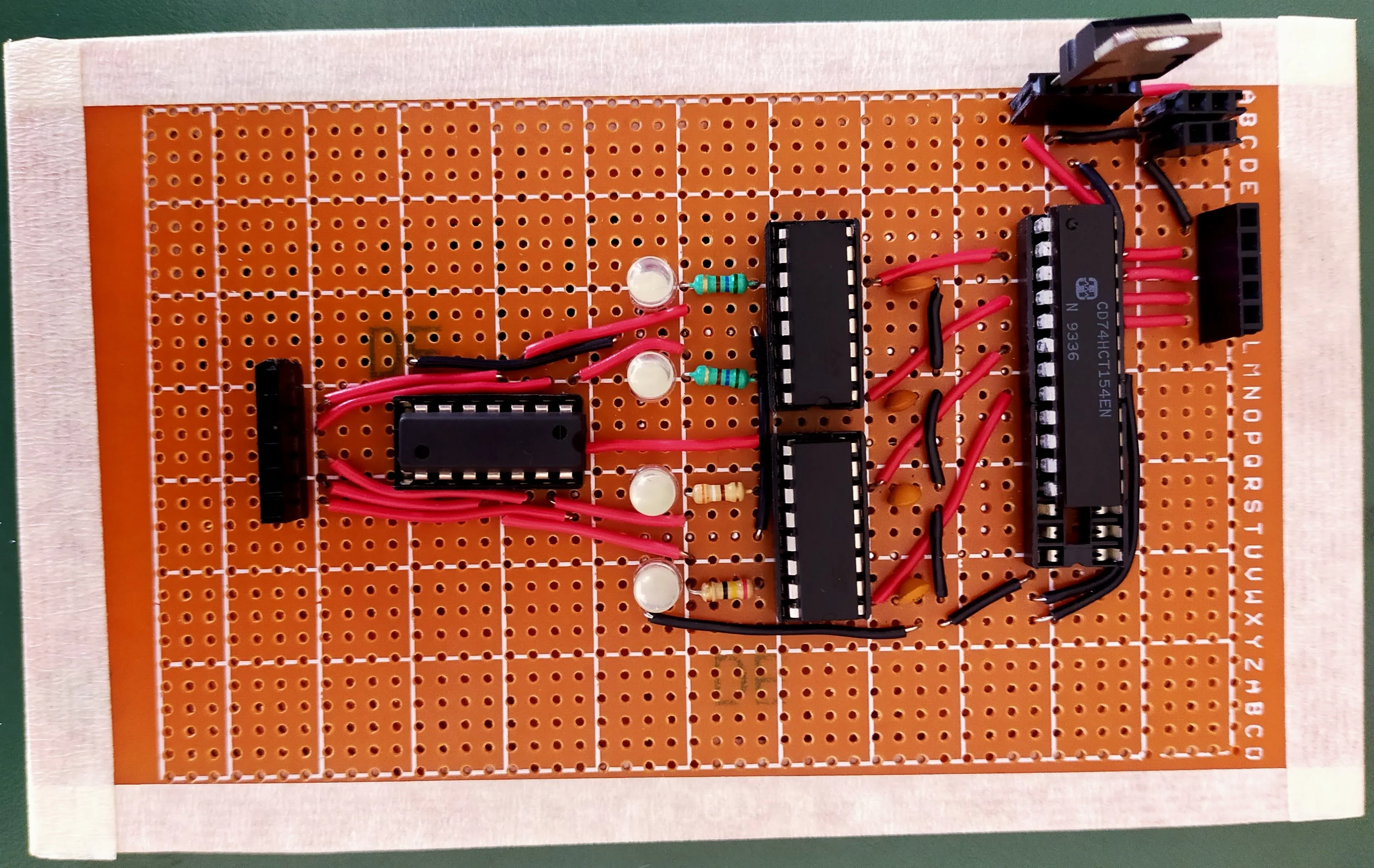
The power supply section uses a center-tapped transformer, bridge rectifier, and a 7805/7812 linear regulator pair to supply both the ±12 V required by the analog front-end and the 5 V logic rail. The full circuit was transferred to a custom single-sided PCB, removing breadboard parasitic capacitance that had caused marginal decoding of the 941 Hz and 1477 Hz tones at the edges of the DTMF frequency matrix.
Tone acquisition from the telephone line uses a coupling transformer to maintain galvanic isolation and attenuate the 48 V DC line voltage while passing the audio-band DTMF signal to the MT8870 input. A steering delay network on the MT8870's ST pin enforces a minimum tone-present window of 40 ms before the decoder latches its output, suppressing false triggers from brief transients during dialing.
Project Gallery
Outcomes & Learnings
End-to-end functional testing confirmed reliable decode and switching across all 12 DTMF tones, with no missed activations or false triggers observed over 200 keying events per channel. The PCB-mounted prototype sustained continuous relay operation through 500 switching cycles per channel without contact degradation, validating the relay and driver selection for domestic-duty loads up to 10 A. These quantitative results are reported in the published journal paper.
The project demonstrated that home automation is achievable at very low cost — total BOM under $15 USD — using only the existing telephone infrastructure, which is particularly relevant for rural Nepal where broadband penetration remains low. The MT8870 decoding approach also generalizes to any audio channel, including radio or cellular voice links, broadening the system's applicability beyond fixed telephone lines.
From a design-process standpoint, this project established fluency in mixed-signal PCB layout, relay selection for inductive switching, and AC load isolation — skills that directly informed subsequent power electronics and protection relay work at the graduate level.