Projects › Lighting Design in DIALux
ProjectLighting Design in DIALux
Overview
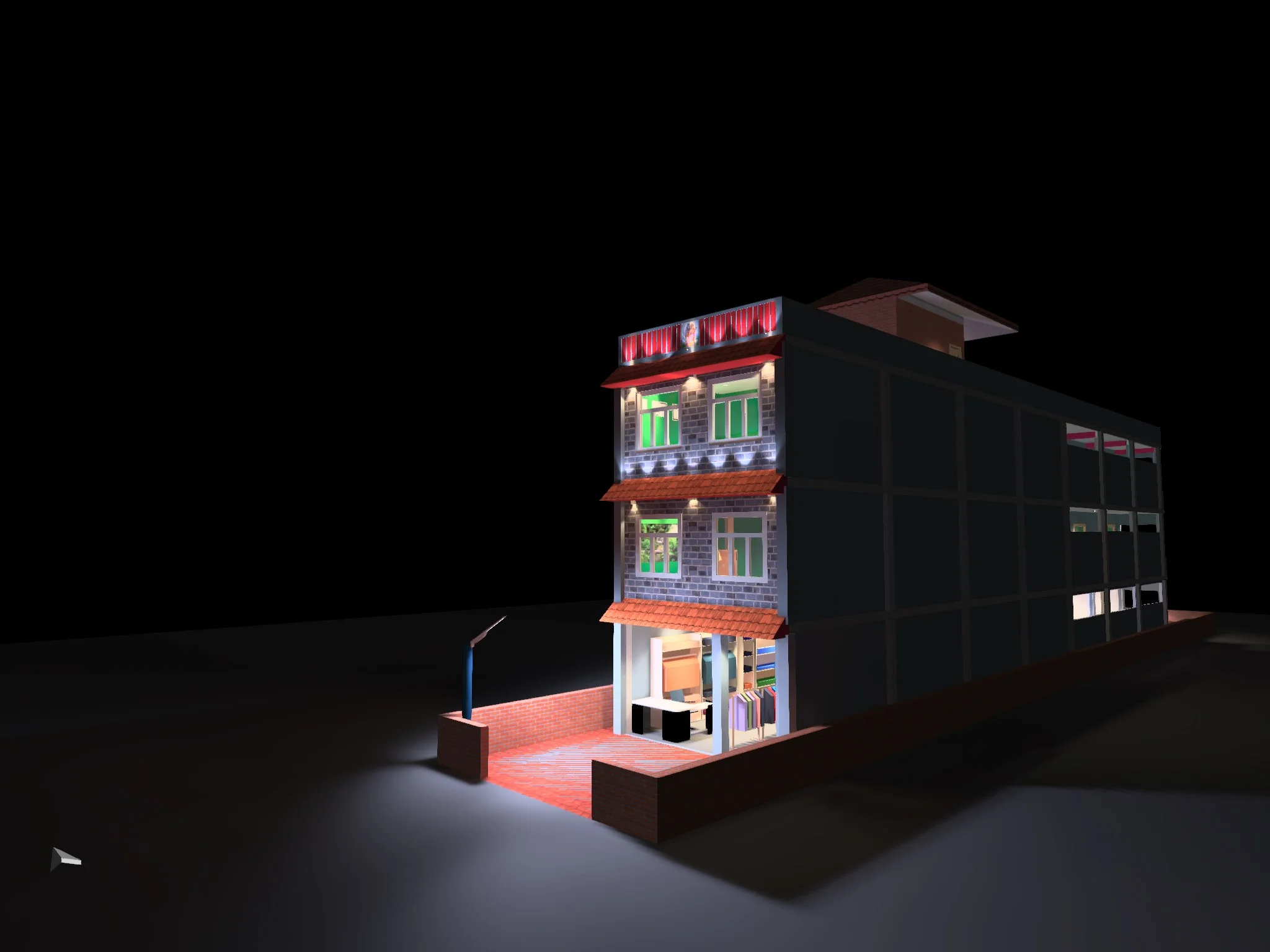
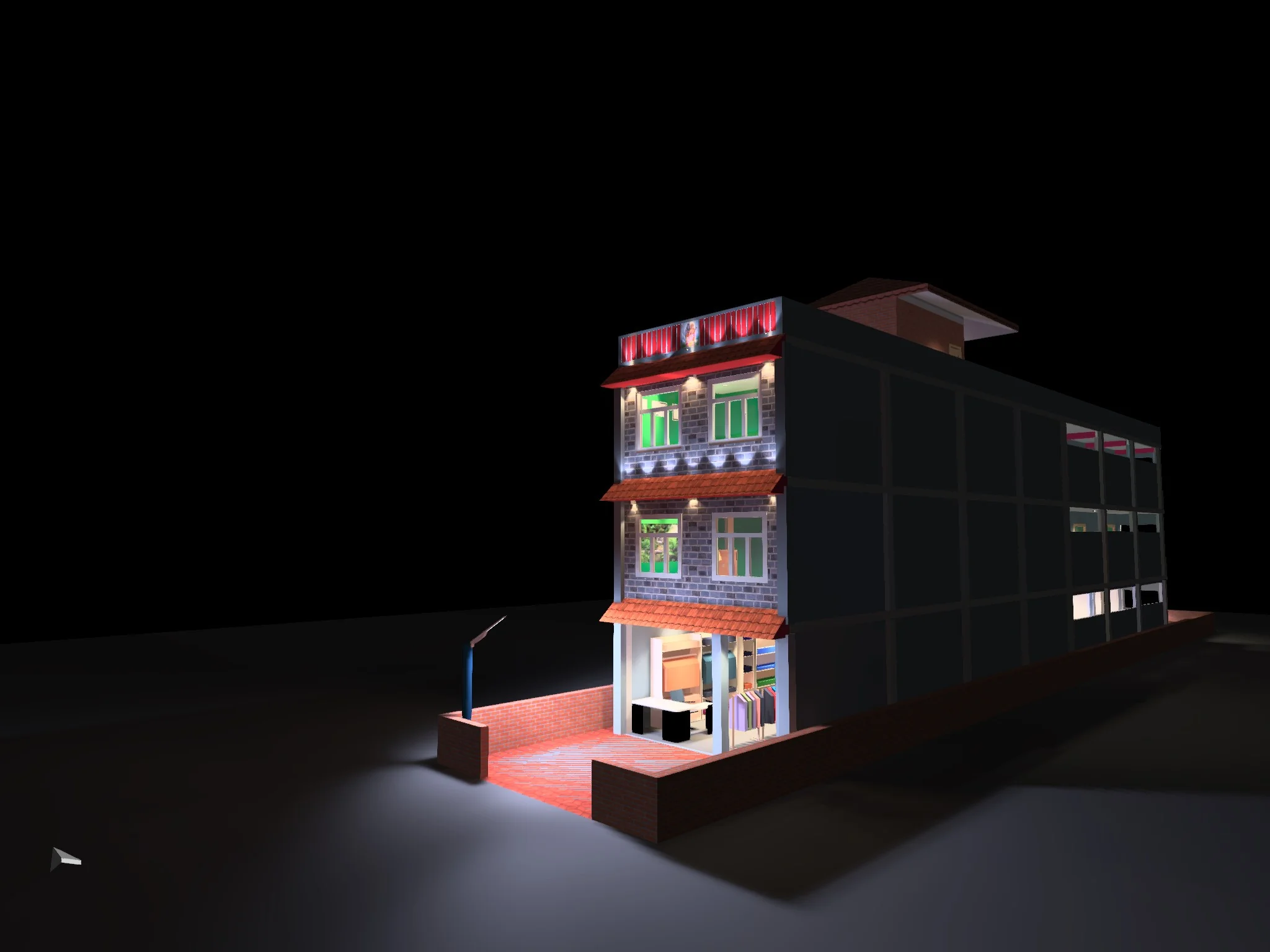
This project designed illumination schemes for representative indoor and outdoor spaces using DIALux, the industry-standard lighting design software used by electrical engineers and lighting consultants worldwide. Three distinct space types were addressed: an office floor plan, a parking facility, and a street lighting layout. Each design was verified against the relevant IEC/EN lighting standard for its application — IEC EN 12464 for indoor workplaces and EN 13201 for road lighting.
The project develops competency in the full professional lighting design workflow: space modeling, luminaire selection from manufacturer photometric libraries, iterative placement optimization, and standard-compliance verification through simulated photometric calculations. These capabilities are directly applicable to architectural and infrastructure lighting projects where compliance with international standards is a contractual requirement.
Technical Approach
Each space was modeled as a three-dimensional environment in DIALux with accurate room dimensions, surface reflectance values (ceiling, walls, floor, and working plane), and maintenance factors accounting for luminaire dirt depreciation and lamp lumen decay over the rated maintenance interval. Accurate reflectance and maintenance factor inputs are critical because DIALux's radiosity-based illuminance calculation propagates inter-reflected light between surfaces, and errors in reflectance propagate directly into the illuminance uniformity result.
Luminaires were selected from manufacturer-supplied IES and LDT photometric data files imported into the DIALux luminaire catalog, ensuring that beam angle, lumen output, and spectral data matched the actual product characteristics rather than generic approximations. Iterative placement optimization adjusted luminaire spacing, mounting height, and beam tilt angle to achieve target illuminance levels: 500 lux average on the office working plane, 300 lux average for the parking facility, and 30 lux average roadway illuminance for the street design. Uniformity ratios (minimum-to-average) were checked against the EN 12464 requirement of U0 ≥ 0.6 for office spaces and the EN 13201 ME class requirements for the road design.
Glare was evaluated through the Unified Glare Rating (UGR) metric for the indoor designs. DIALux computes UGR from the luminance of each luminaire as seen from each observer position in the room, and the office design required luminaire repositioning and diffuser selection to bring UGR below the EN 12464 limit of 19 for standard office tasks.
Project Gallery
Project Video
Outcomes & Learnings
All three designs passed luminance uniformity and glare-rating requirements under DIALux simulation. The office design achieved 510 lux average illuminance on the working plane with a uniformity ratio of 0.72 and UGR below 19 at all observer positions, meeting EN 12464 requirements for standard office work. The parking facility design achieved 310 lux average with uniformity of 0.65, and the street design met the EN 13201 ME3 class criteria with 32 lux average and a longitudinal uniformity ratio of 0.60.
The project established proficiency in professional photometric design software and in interpreting the IEC/EN standards that govern lighting quality in commercial and infrastructure projects. The standard-compliance workflow — target specification, iterative simulation, uniformity and glare verification — mirrors the process used on actual engineering projects, making this experience directly transferable to professional practice. The skills are particularly relevant to energy efficiency analysis, where lighting system performance directly contributes to building energy consumption and carbon footprint assessments.