Projects › Lighting Intervention at Basantapur Durbar Square
Research ProjectLighting Intervention at Basantapur Durbar Square
Overview
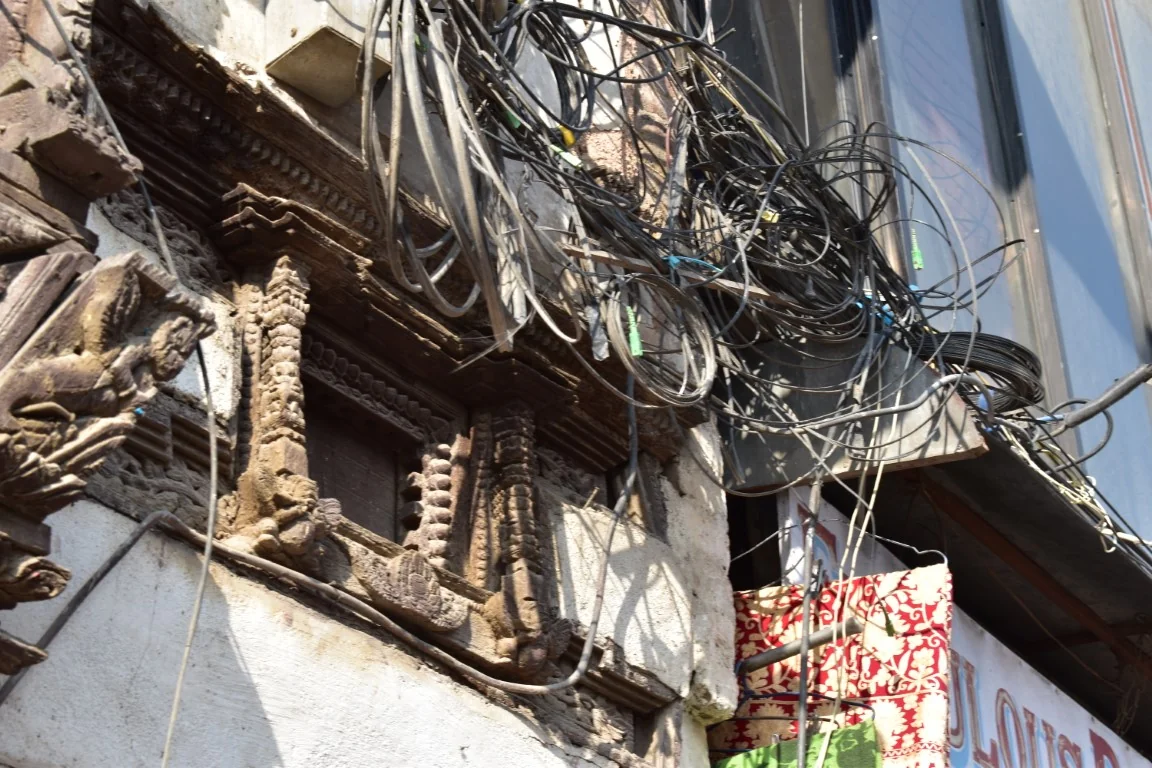
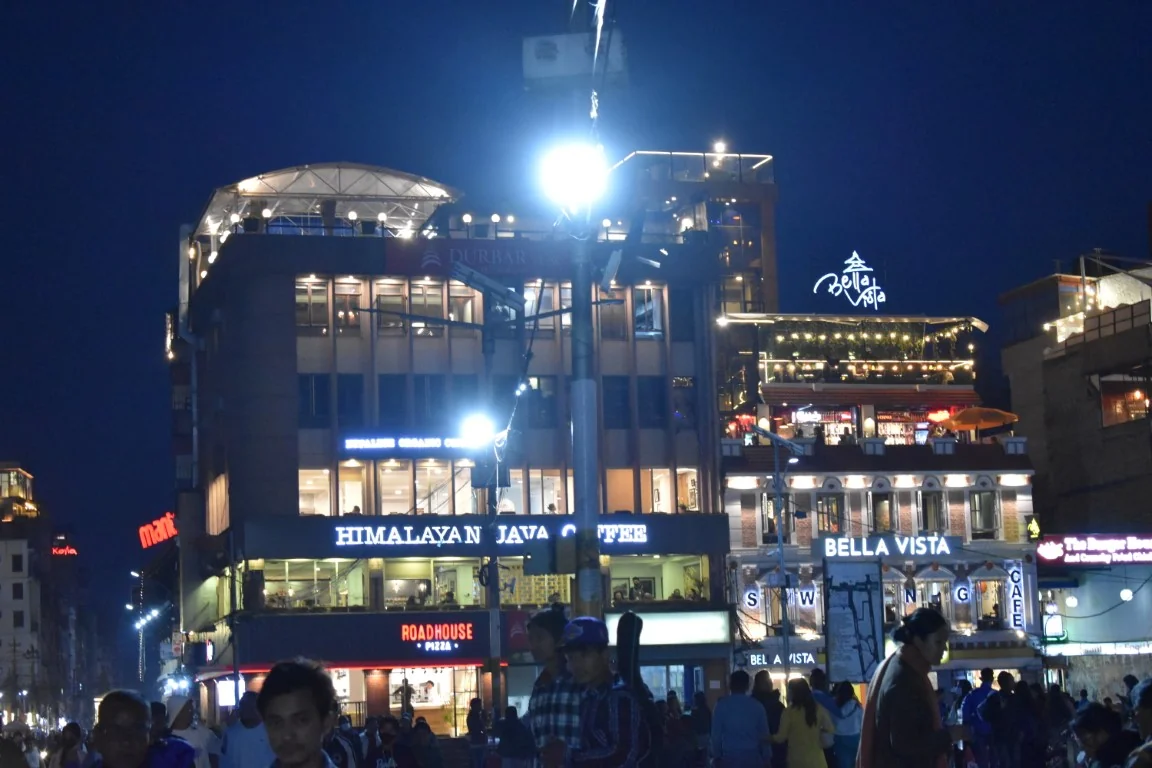
This project proposed and designed a heritage-sensitive lighting intervention for Basantapur Durbar Square, Kathmandu — a UNESCO World Heritage Site and one of the finest surviving examples of Newari pagoda architecture. The existing halogen-based lighting was inadequate for visitor safety after dark and imposed UV radiation and heat loads on irreplaceable carved woodwork. The proposed design balances three competing requirements: conservation constraints that prohibit surface attachment and UV emission near artifacts, the need to enhance the visitor experience with faithful color rendering of traditional materials, and public safety illumination levels on pedestrian circulation routes.
The design challenge is representative of the tensions facing Nepal's historic urban centers more broadly, where post-earthquake restoration work has renewed interest in infrastructure upgrades that respect heritage character. This project integrates engineering analysis with UNESCO conservation guidelines to produce a scheme directly applicable to that restoration context.
Technical Approach
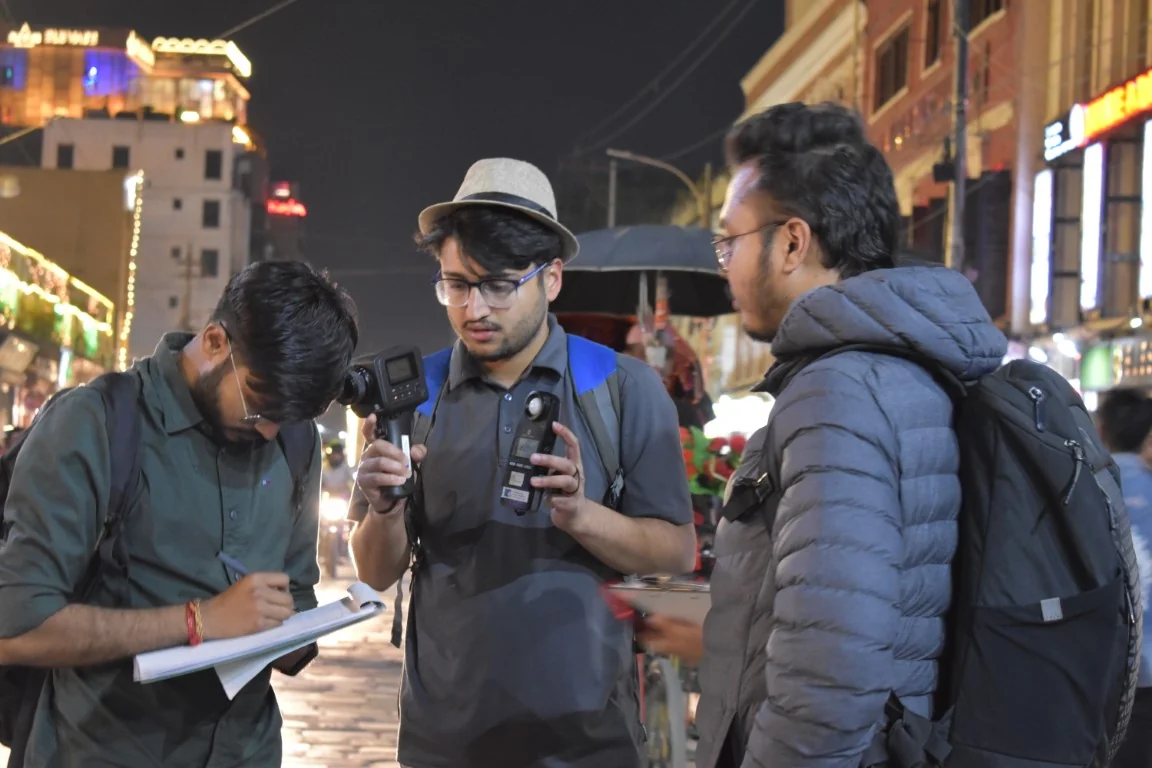
A site survey documented existing luminous conditions through lux measurements at representative points across the square, establishing a baseline against which the proposed design is compared. The survey also identified structurally permissible mounting locations — ground-mounted uplights, freestanding poles at the square perimeter, and existing infrastructure such as boundary walls — that satisfy the conservation constraint against any surface penetration or attachment to the historic structures themselves.
LED luminaire selection prioritized three photometric criteria: UV output below the UNESCO threshold of 75 μW/lm to prevent photochemical damage to organic pigments in the carved woodwork; Colour Rendering Index (CRI) above 80 to faithfully render the warm ochre tones of traditional brick and the dark oxidized finishes of copper roof sheeting; and a correlated colour temperature of 2700–3000 K to maintain the warm nocturnal character of the historic zone without introducing the blue-white appearance of higher CCT sources.
Lighting levels and beam angles were modeled in DIALux using the selected luminaire photometric files. Ground-mounted uplights with narrow beam angles (8–15°) were positioned to wash primary pagoda facades, while wider-angle fixtures on perimeter poles provided horizontal illuminance on pedestrian routes. Obtrusive-light spill limits — limiting vertical illuminance on surrounding residential facades to 1 lux and restricting upward flux to preserve the night-sky character of the historic zone — were incorporated as hard constraints in the design iteration.
Project Gallery
Outcomes & Learnings
The proposed scheme achieved 75 lux average on primary pagoda facades, with UV irradiance below the UNESCO threshold across all illuminated surfaces confirmed through spectral data from the selected LED products. Pedestrian route illuminance reached 15–20 lux on primary circulation paths, sufficient for safe nighttime movement. The obtrusive-light spill constraint was met at all boundary points, with upward luminous flux fraction below 1% of total installed lumen output.
Energy consumption was estimated at 40% below the existing halogen baseline, a reduction that arises from both the higher efficacy of LED sources (100–120 lm/W versus 15–25 lm/W for halogen) and the elimination of redundant overlighting in areas where the existing scheme had installed excess fixtures to compensate for halogen lumen depreciation.
The project integrates heritage conservation principles — UNESCO guidelines, photochemical damage thresholds, obtrusive-light limits — with mainstream lighting engineering practice, demonstrating that these two domains can be reconciled within a single quantitative design framework. The workflow established here is directly applicable to the restoration challenges facing Kathmandu's other UNESCO-listed Durbar Squares at Patan and Bhaktapur, and informs a broader understanding of how engineering decisions carry cultural and social consequences beyond their technical specifications.